by OMNI ADRD • November 24, 2026
Blood plays all kinds of roles in our body—obviously, it keeps us alive, but it also plays a critical role in transporting molecules, maintaining body heat, and fighting infections. However, researchers are investigating a surprising role that blood might be playing: taking a snapshot of our cognitive health.
As science and technology evolve, researchers are finding new biological indicators of health (known as biomarkers) that can be analyzed from routine lab samples, such as blood draws. By measuring the kinds and quantities of proteins expressed in a person’s blood, for example, researchers can identify patterns of protein expression for healthy adults and adults at different stages of disease. These blood-based biomarkers are a critical opportunity to detect early changes in our health, and researchers like Dr. Nicholas Ashton are finding out what they could mean for Alzheimer’s disease and related dementias (AD/ADRD) research.
Blood-Based Biomarkers in Alzheimer’s Disease
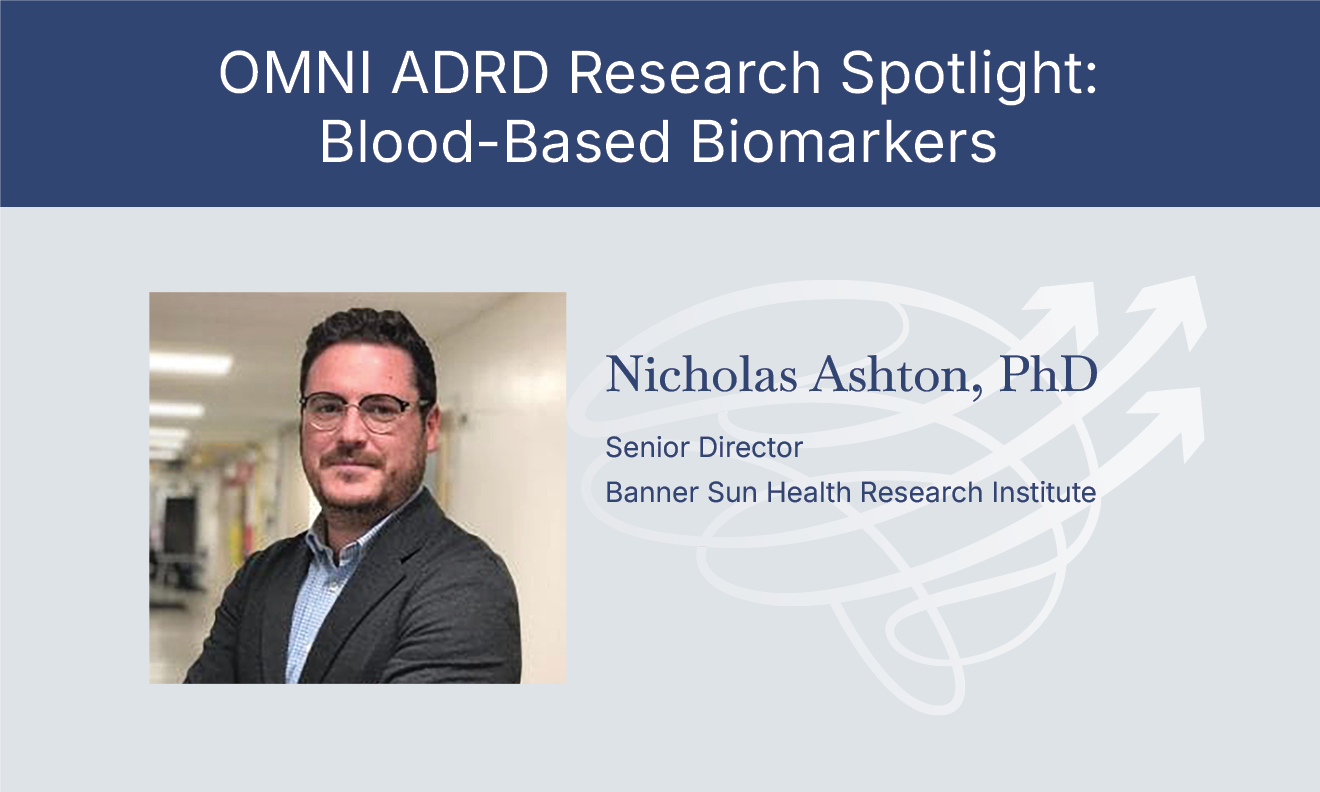
Ashton is a senior director at the Banner Sun Health Research Institute and Banner Alzheimer’s Institute, where he specializes in research on biomarkers found in blood plasma. He focuses specifically on a biomarker called p-tau217, a form of the tau protein that is released in the bloodstream as amyloid plaques build up in the brain. As a result, abnormal p-tau217 levels can signal amyloid plaque buildup much earlier than other measures, such as brain imaging scans. In people with a genetic risk of Alzheimer’s disease, for example, p-tau217 levels can start to rise up to 20 years before symptoms of cognitive decline begin.
The United States Food and Drug Administration has currently approved four blood tests that clinicians can use in AD/ADRD clinical trials. These p-tau217 tests have an important caveat: they only detect the presence of amyloid plaques, and amyloid plaques alone don’t prove that someone has Alzheimer’s disease. The tests are therefore most useful when a clinician has already observed hallmark symptoms of Alzheimer’s disease such as cognitive decline and wants to confirm whether amyloid plaques are present to support an Alzheimer’s diagnosis. For this reason, they are currently intended only for individuals who already show signs of cognitive impairment.
Ashton’s team has found that cognitively healthy adults with elevated p-tau217 experience a steeper decline in their cognitive function than those with average p-tau217 expression. Even so, Ashton emphasized that the link between high p-tau217 and later decline is not yet strong enough to use in prevention trials that test treatments in people who have Alzheimer’s pathology without cognitive symptoms. That caution is especially warranted, because current treatments aren’t effective enough to outweigh their potential side effects in people who are still healthy.
Expansions in Biomarker Research
Advances in blood-based biomarker research are taking place on three fronts: more sensitive tests, larger studies, and easier sample collection.
As biomarker tests continue to get more accurate and sensitive, researchers can detect less abundant blood-based biomarkers that are more closely linked to features of neurodegeneration. For instance, researchers are investigating a protein called eMTBR-tau243, which correlates with the buildup of tangled tau protein fibers in neurons and might be a stronger predictor of cognitive change than p-tau217.
New automated biomarker testing platforms allow researchers to run much larger studies, sometimes with whole populations. Ashton’s team recently tested blood samples from more than 18,000 people in Trøndelag, Norway. Although no one showed visible symptoms of cognitive decline, nearly 30% of adults over 75 had p-tau levels consistent with amyloid plaque buildup.
Finally, new collection methods are making blood samples easier to give and handle. Devices such as Tasso use a simple arm or finger prick instead of drawing blood from a vein, making the process more comfortable for participants. Researchers are also turning to dried blood spot samples, which are easier to process and store over time. Still, dried blood spot collection cards aren’t designed for the high sample volumes and plasma separation that AD/ADRD biomarker testing requires. They will need to be optimized for AD/ADRD studies before researchers can use them for scalable biomarker testing.
Together, these advances suggest that blood-based biomarkers offer a promising way to measure and track how our brains change over time.
Want to learn more about our work on assessing brain health for AD/ADRD prevention research? Follow our LinkedIn page or sign up for the OMNI ADRD newsletter!
#ADRD #DigitalHealthTechnology #CognitiveAssessment #ADRDPrevention #NetworkSpotlight #Biomarkers #BloodBasedBiomarkers